30 School Lunch Ideas Kids Will Actually Eat
Thirty practical school lunch ideas, an easy mix-and-match lunchbox formula, a five-day plan, and food-safety tips for calmer mornings.
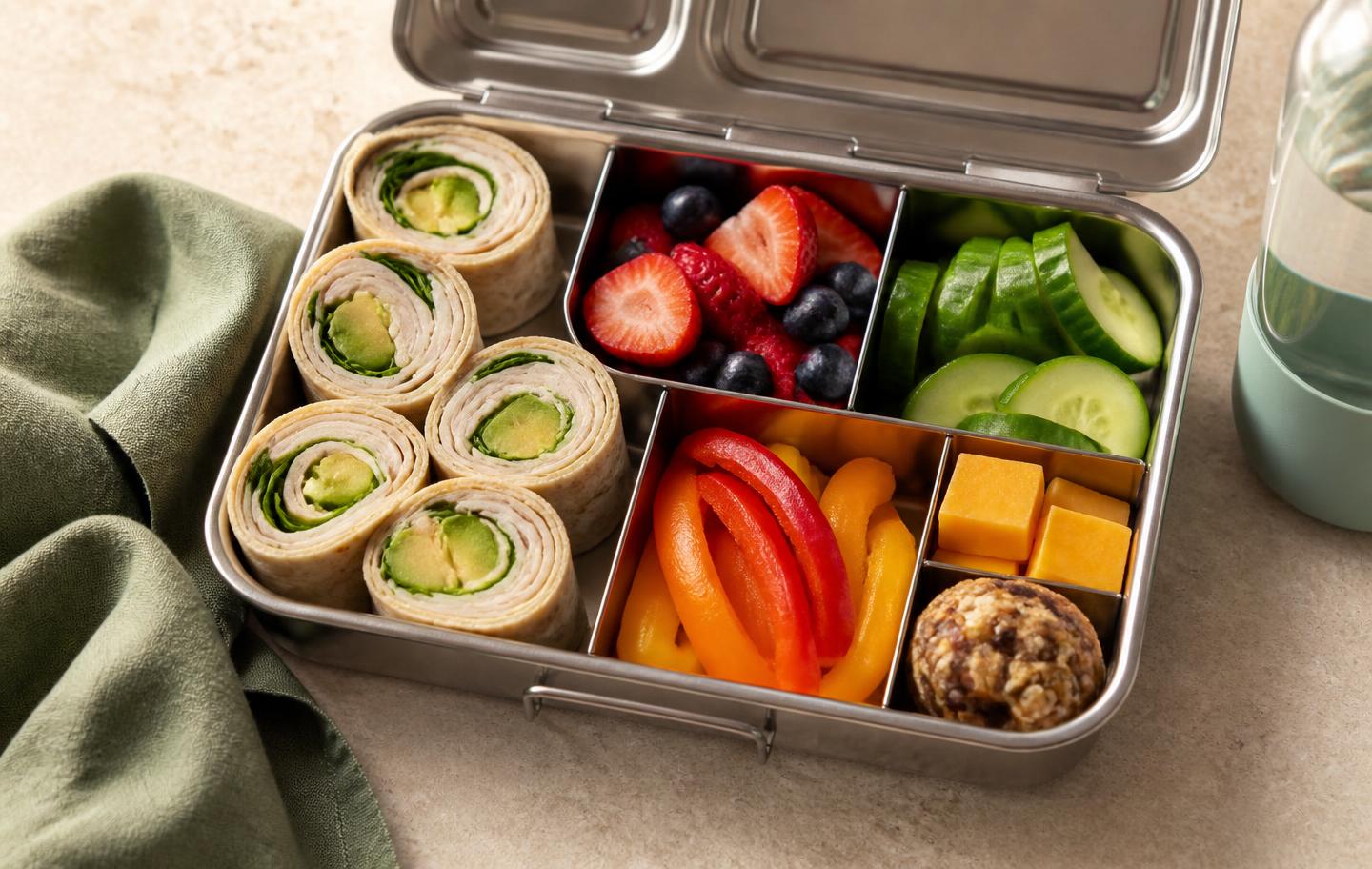
Packing a school lunch sounds simple until it is 7:20 a.m., the bread is nearly finished and yesterday’s carefully cut vegetables have returned untouched. A useful lunchbox does not need to be elaborate. It needs to be easy to open, familiar enough to eat and varied enough to stay interesting.
This guide gives you 30 practical school lunch ideas, plus a flexible formula that turns whatever is already in the fridge into a balanced lunch. The aim is not a picture-perfect box. It is food your child can manage in the time they have.
The easy lunchbox formula
Instead of planning 30 completely different lunches, choose one item from each of these four groups:
- A filling main: a wrap, sandwich, pasta, rice, eggs, beans, chicken, yoghurt or cheese.
- One or two fruits or vegetables: berries, apple, satsuma, grapes cut appropriately for age, cucumber, peppers, carrots or peas.
- A satisfying side: whole-grain crackers, popcorn for older children, an oat bite, hummus or yoghurt.
- Water: pack a refillable bottle if the school permits it.
For a simple visual guide, Harvard’s Kid’s Healthy Eating Plate suggests making roughly half the meal fruit and vegetables, with the rest shared between whole grains and healthy protein. It also emphasizes variety rather than perfection at every meal. See Harvard’s healthy lunchbox guide.
A small lunchbox may not divide neatly into those proportions, and that is fine. Think about balance across the day and week, not whether every strawberry sits in the correct compartment.
10 wraps and sandwiches that travel well
1. Turkey, avocado and lettuce pinwheels
Spread a whole-grain tortilla with mashed avocado, add turkey and lettuce, roll tightly and slice. A squeeze of lemon helps slow browning.
2. Hummus rainbow wrap
Use hummus as the glue, then add grated carrot, cucumber and thin pepper strips. Keep the filling modest so the wrap stays closed.
3. Chicken and yoghurt-pesto sandwich
Mix chopped cooked chicken with plain yoghurt and a little pesto. Add spinach or cucumber and use seeded bread if your child enjoys it.
4. Cream cheese and cucumber bagel
A mini bagel is easier for small hands. Pat the cucumber dry before adding it so the bread does not become soggy.
5. Egg and cress pita
Mash a hard-boiled egg with a spoonful of yoghurt or mayonnaise, then tuck it into a small pita with cress. Keep it properly chilled.
6. Sunflower-seed butter and banana roll-up
For schools that do not allow nuts, sunflower-seed butter can be a useful alternative. Check the product label and your school’s allergy policy before packing it.
7. Tuna and sweetcorn pocket
Combine drained tuna, sweetcorn and a little plain yoghurt or mayonnaise. A pita pocket contains the filling better than sliced bread.
8. Mozzarella, tomato and basil sandwich
Use firm tomato slices, pat them dry and place them between mozzarella and basil so the bread stays fresher.
9. Bean and cheese quesadilla wedges
Mash black beans onto a tortilla, add grated cheese, fold and toast in a dry pan. Cool completely before cutting into wedges and packing.
10. Leftover roast chicken and crunchy slaw wrap
Shred cooked chicken and add a small handful of dry cabbage-and-carrot slaw. If you are using leftovers, first check our guide to how long leftovers last in the fridge and freezer.
10 no-sandwich school lunch ideas
11. Build-your-own cracker stack
Pack whole-grain crackers, cheese slices, cucumber and turkey separately. Children can assemble each bite at lunchtime, which also prevents sogginess.
12. Pesto pasta and peas
Toss cooled pasta with pesto, peas and small mozzarella pieces. Use about 100–150 g (3.5–5 oz) cooked pasta, depending on age and appetite.
13. Greek-style pasta salad
Combine pasta with cucumber, tomato, olives and feta. Dress lightly with olive oil and lemon rather than enough dressing to pool at the bottom.
14. Chicken rice salad
Mix chilled cooked rice with chicken, grated carrot, cucumber and a mild yoghurt dressing. Cool cooked rice promptly and keep the lunch cold.
15. Couscous, chickpea and roasted pepper cup
Stir cooked couscous with chickpeas, chopped roasted pepper, parsley and lemon. It is soft, fork-friendly and easy to prepare the night before.
16. Mini frittatas
Whisk 6 eggs with 60 ml (1/4 cup) milk, grated cheese and finely chopped vegetables. Bake in a greased muffin tin at 180°C (350°F) for 15–18 minutes, until set. Cool before refrigerating.
17. Yoghurt, berries and oat crunch
Pack thick plain or Greek yoghurt in a leakproof container. Keep berries and 25 g (about 1/4 cup) oat crunch separate so they stay crisp.
18. Falafel snack box
Add two or three small falafel, cucumber, tomato, pita triangles and hummus. For younger children, cut everything into manageable pieces.
19. Cheese, fruit and oat bites
Pair cheddar cubes with sliced pear or berries, whole-grain crackers and a homemade oat bite. It is simple, but it covers several textures and food groups.
20. Cold noodle salad
Toss noodles with shredded chicken or edamame, grated carrot and cucumber. Use a light sesame-free dressing if the school has restrictions, and always check its current allergen rules.
10 warm lunches for a food flask
Warm lunches work best in a properly insulated food flask. Preheat it with boiling water according to the manufacturer’s instructions, empty it, then add food that is steaming hot. Hot food should stay at or above 60°C (140°F); Health Canada provides more advice on keeping packed lunches safe.
21. Tomato and red lentil soup
Red lentils make tomato soup more filling without changing its familiar flavor much. Blend until smooth and include a small bread roll.
22. Chicken noodle soup
Use short noodles that fit comfortably on a spoon. Add finely diced carrots, peas and shredded cooked chicken.
23. Mild bean chilli
Black beans, kidney beans, tomatoes and sweetcorn make a colorful filling. Pack with a small portion of rice or tortilla strips.
24. Macaroni with peas
Stir peas into macaroni cheese during the final minutes of cooking. A sauce that is slightly looser at home will have a better texture by lunchtime.
25. Vegetable fried rice
Use hot, freshly cooked rice or reheat previously chilled rice thoroughly. Add egg, peas, sweetcorn and finely diced carrots.
26. Turkey meatballs and orzo
Small meatballs are easier to eat from a flask. Cook ground turkey to 74°C (165°F), then add tomato sauce and soft orzo.
27. Chickpea coconut curry
Keep the spices mild and add spinach or peas. A thick curry is less likely to spill and works well with rice.
28. Hidden-vegetable tomato pasta
Blend roasted carrot, pepper or courgette into tomato sauce. This adds vegetables while keeping a smooth texture for children who prefer foods without visible pieces.
29. Chicken and sweetcorn rice
A simple combination of rice, shredded chicken, sweetcorn and mild stock. Make it spoonable rather than dry by adding a little extra warm stock.
30. Potato, leek and white bean soup
Blend potatoes, leeks and white beans with stock until smooth. The beans add body and protein without needing cream.
A realistic five-day school lunch plan
- Monday: Turkey-avocado pinwheels, cucumber, berries and an oat bite.
- Tuesday: Pesto pasta and peas, pepper strips and a satsuma.
- Wednesday: Warm tomato-lentil soup, a mini roll, cheese and pear.
- Thursday: Falafel snack box with pita, hummus, cucumber and grapes prepared appropriately for age.
- Friday: Bean-and-cheese quesadilla wedges, sweetcorn, strawberries and plain yoghurt.
Notice that ingredients repeat: cucumber appears three times, berries twice, and one pack of tortillas covers Monday and Friday. Repetition makes shopping easier while a change in format keeps lunch from feeling identical.
The 25-minute Sunday preparation routine
- Wash and dry sturdy produce. Prepare peppers, carrots and cucumber; leave delicate berries unwashed until needed if that helps them keep longer.
- Cook one flexible base. Make pasta, couscous or mini frittatas for the first half of the week.
- Prepare two easy extras. Portion crackers and make a yoghurt dip or hummus box.
- Write a five-line plan. Put one lunch beside each weekday so nobody has to decide in the morning.
- Freeze a backup. Quesadilla wedges, mini muffins or a small frozen soup portion can rescue a difficult morning.
If weekday dinners are also competing for your time, these easy weeknight dinners use many lunchbox-friendly staples.
How to stop lunch coming home untouched
- Pack a sensible amount. A crowded box can be overwhelming and may take too long to eat.
- Use familiar food plus one small variation. Lunch at school is rarely the best time to test an entirely new meal.
- Make it easy to open. Ask your child to test every container at home.
- Keep wet and crisp foods apart. Pack dips, dressings and juicy fruit separately.
- Ask a specific question. “Was there enough time?” and “What was hardest to eat?” reveal more than “Why didn’t you eat it?”
Lunchbox food safety in four steps
- Start cold. Refrigerate prepared food overnight rather than packing it while warm.
- Use an insulated bag and cold sources. Health Canada recommends using an insulated lunch bag with a freezer pack for cold perishable food. Read the official school-lunch safety guidance.
- Separate raw and ready-to-eat food. Wash hands, boards and utensils, and cook meat to a safe internal temperature. Poultry should reach 74°C (165°F). Check the official safe-temperature chart.
- Discard unsafe leftovers. Perishable food that has not stayed cold should not be saved for later.
Food-allergy rules vary between schools. Check the school’s current policy, read every package label and avoid assuming that a “nut-free” substitute is safe for every child.
Frequently asked questions
What can I pack instead of sandwiches?
Try pasta salad, couscous, mini frittatas, falafel, crackers with cheese and vegetables, yoghurt with fruit, or a warm soup in a food flask. The easiest substitute is usually a familiar filling presented with a different carbohydrate.
How much food should I pack?
Age, appetite, school schedule and activity level all matter. Start with the amount your child normally eats at home, then adjust based on what returns. A smaller lunch with an approved snack may work better than one very full box.
Can I prepare school lunches the night before?
Yes. Keep the assembled lunch refrigerated, leave crisp items separate from wet fillings, and add items that brown easily in the morning. Pack the chilled lunch with adequate cold sources.
How do I handle a picky eater?
Include at least one dependable food, keep portions of less familiar foods small and involve the child in choosing from two acceptable options. Repeated low-pressure exposure is more practical than turning lunch into a daily negotiation.
The simplest place to start
Choose five ideas from this list, not all 30. Pick one wrap, one pasta or grain lunch, one snack box, one warm option and one reliable favorite. Repeat that rhythm next week with different fruit or vegetables. A school lunch routine becomes sustainable when it reduces decisions for the person packing it and still feels familiar to the person eating it.