
The Pantry Staples Checklist: 42 Basics That Turn Into Dinner
A stocked shelf is the difference between cooking and ordering in. Here are the 42 pantry staples worth keeping, how long they really last, and six dinners you can make without a shop.
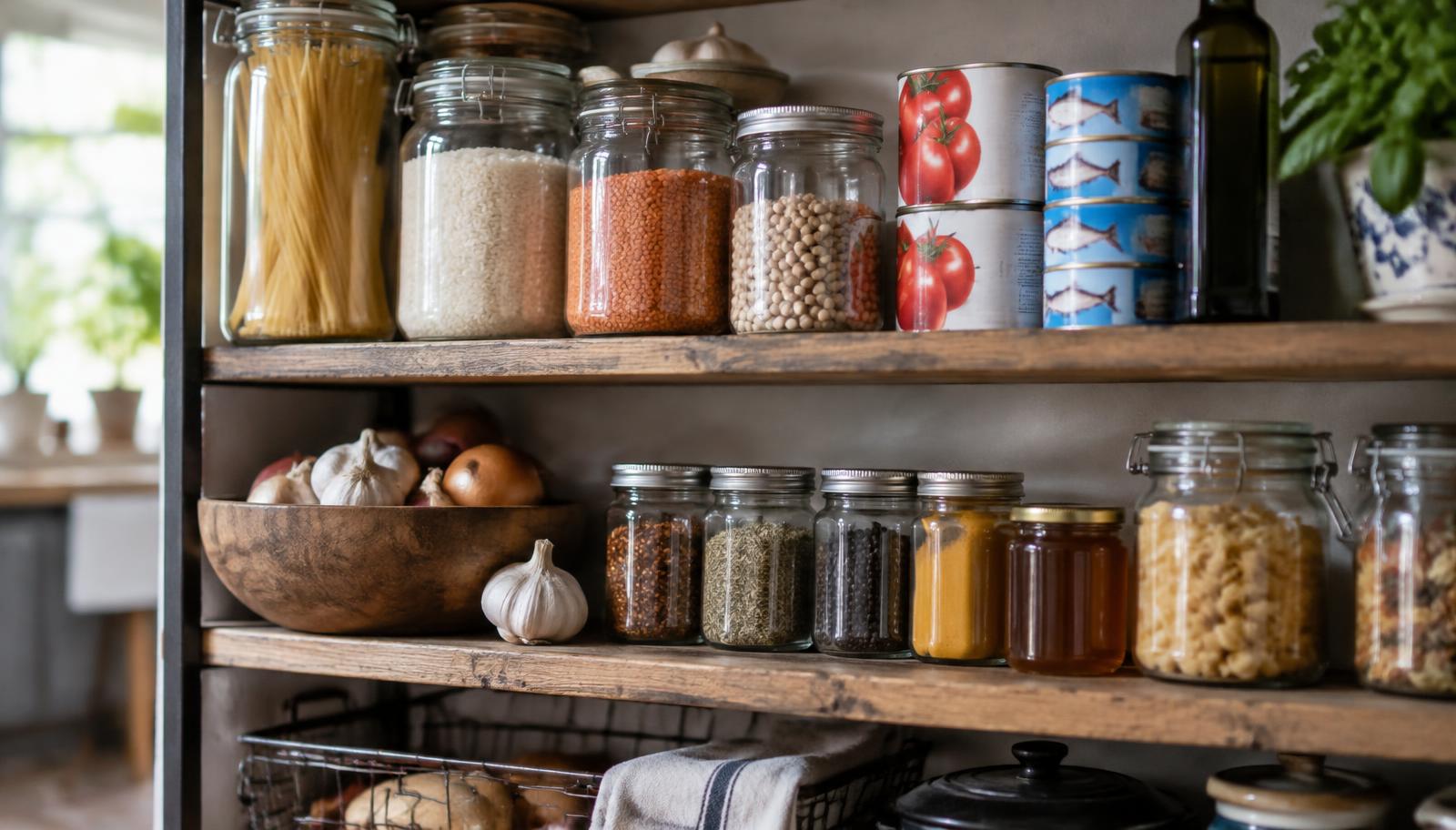
Most weeknight takeaway orders are not a cooking problem. They are a shelf problem. You open the cupboard, see half a bag of rice and three jars of something, and decide there is nothing to eat.
A pantry that is actually stocked changes that. With the right 40-odd basics on the shelf, you only ever need to buy one or two fresh things to make dinner. This is the checklist, the honest shelf lives, and six meals you can cook tonight without going anywhere.
What counts as a pantry staple
A staple earns its shelf space if it ticks three boxes: it keeps for months, it works in more than one dish, and it is cheap per portion. Saffron is lovely; it is not a staple. Tinned tomatoes are a staple.
Build around slow carbohydrates, a shelf-stable protein, a fat, an acid and something salty — that is a meal skeleton you can dress up in any cuisine. The NHS Eight tips for healthy eating is a good sanity check on the balance of that shelf: starchy foods as the base, plenty of pulses and vegetables, less salt and saturated fat.
The checklist: 42 pantry staples
Grains and pasta (7)
- Long-grain or basmati rice — 1 kg (2 lb 4 oz)
- Short-grain or risotto rice — 500 g (1 lb 2 oz)
- Dried pasta, two shapes — 1 kg (2 lb 4 oz) total
- Couscous or bulgur wheat — 500 g (1 lb 2 oz)
- Rolled oats — 1 kg (2 lb 4 oz)
- Plain flour — 1 kg (2 lb 4 oz)
- Noodles (egg or rice) — 2 packs
Pulses, tinned and dried (6)
- Chickpeas — 4 tins (400 g / 14 oz each)
- Cannellini or butter beans — 3 tins
- Black or kidney beans — 3 tins
- Red split lentils — 500 g (1 lb 2 oz)
- Green or brown lentils — 500 g (1 lb 2 oz)
- Peanut butter — 1 jar (340 g / 12 oz)
Tins and jars (7)
- Chopped tomatoes — 6 tins (400 g / 14 oz each)
- Tomato purée / paste — 1 tube or jar
- Coconut milk — 2 tins (400 ml / 13.5 fl oz)
- Tuna or sardines in oil — 4 tins
- Sweetcorn — 2 tins
- Olives or capers — 1 jar
- Stock cubes or bouillon — 1 box
Oils, vinegars and sauces (7)
- Olive oil — 1 L (34 fl oz)
- Neutral oil for high heat (sunflower or rapeseed) — 500 ml (17 fl oz)
- Red or white wine vinegar — 500 ml (17 fl oz)
- Soy sauce — 250 ml (8.5 fl oz)
- Mustard — 1 jar
- Hot sauce or chilli paste — 1 bottle
- Honey or maple syrup — 1 jar
Spices and dried aromatics (8)
- Fine salt and flaky salt
- Black peppercorns
- Smoked paprika
- Ground cumin
- Dried oregano
- Chilli flakes
- Ground cinnamon
- Curry powder or garam masala
Cool, dark corner (4)
- Onions — 1 kg (2 lb 4 oz)
- Garlic — 2 bulbs
- Potatoes — 2 kg (4 lb 8 oz)
- Lemons — 3 (they keep 2–3 weeks in the fridge)
Freezer staples (3)
- Peas and spinach — 1 kg (2 lb 4 oz) total
- Sliced bread or flatbreads — 1 pack
- Chicken thighs or a block of firm tofu — 500 g (1 lb 2 oz)
Six dinners from the shelf alone
- Red lentil soup. Onion, garlic, cumin, 200 g (7 oz) red lentils, stock, lemon. 25 minutes.
- Pasta e ceci. Chickpeas, tinned tomatoes, rosemary or oregano, small pasta, chilli flakes.
- Coconut dal. Lentils, coconut milk, curry powder, frozen spinach, rice.
- Tuna and white bean salad. Tinned tuna, cannellini beans, red onion, olive oil, vinegar, capers.
- Spanish-style potatoes and eggs. Potatoes, smoked paprika, onion, eggs on top, lid on for 5 minutes.
- Peanut noodles. Noodles, peanut butter, soy sauce, vinegar, hot sauce, frozen peas.
Each of these costs roughly €1.20–€2.50 per portion (about $1.30–$2.70, £1–£2.20, CA$1.80–CA$3.70, A$2–A$4) depending on where you shop — which is why a stocked pantry is the cheapest kitchen upgrade there is. There are more ideas in our guide to eating well on a budget.
How long staples actually keep
- Dried pasta, rice, lentils: 1–2 years in a sealed jar, away from heat and light.
- Flour: 6–12 months; wholemeal flour goes rancid faster because of the oil in the germ.
- Tins: 2–5 years. Discard any tin that is bulging, leaking or badly dented on a seam.
- Olive oil: best within 12–18 months of pressing; store it in a dark cupboard, never beside the hob.
- Ground spices: still safe for years, but flat after 6–12 months. Whole spices keep their punch far longer.
- Nuts, seeds, nut butters: 3–6 months in the cupboard, up to a year in the fridge.
- Potatoes and onions: 3–4 weeks somewhere cool, dark and airy — and apart from each other, since onions make potatoes sprout.
Cupboard temperature matters more than people think: aim for under 21°C (70°F) and keep jars out of direct sun. The US Food and Drug Administration''s guide to storing food safely covers the fridge and freezer side of it, and our own fridge and freezer storage guide has the numbers for cooked food.
The 10-minute restock routine
- Pull everything forward. Once a month, bring older packets to the front. Most pantry waste is something perfectly good hiding at the back.
- Count in twos. The rule is simple: when you open the second-to-last of anything, it goes on the list.
- Decant what you use weekly. Jars show you the level at a glance, and they keep pasta and rice dry and pest-free.
- Cook one pantry dinner a week. It rotates your stock naturally and saves a shop.
- Write the list from the meals, not the shelf. Plan the week first, then note only what is missing — that is how you stop buying a fourth jar of cumin.
The World Health Organization''s healthy diet fact sheet is a useful reminder of what the shelf should be weighted towards: pulses, whole grains, nuts, and far less salt than most cupboards contain.
Print this bit
If you only keep twelve things: rice, pasta, oats, red lentils, chickpeas, tinned tomatoes, coconut milk, stock cubes, olive oil, soy sauce, onions and garlic. That short list alone covers four of the six dinners above.