Eat Well on a Budget: 18 Ways to Cut Your Grocery Bill Without Eating Boring Food
Grocery prices keep climbing, but cheap food does not have to mean sad food. Here are 18 practical ways to spend less per week and still eat meals you actually look forward to.
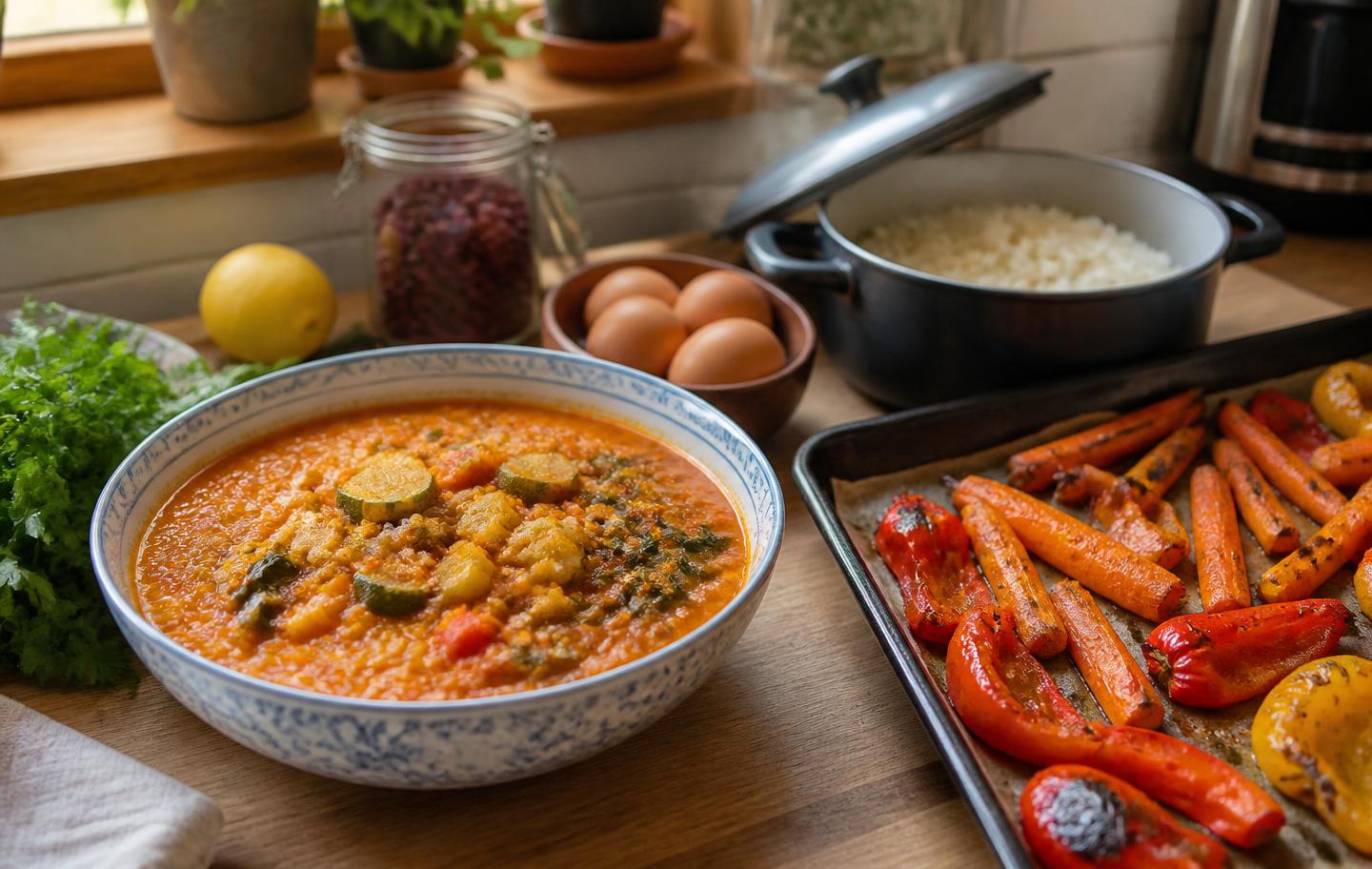
Most people try to save money on food by buying less. That usually backfires: you run out mid-week, order takeaway twice, and end up spending more than you would have. The households that genuinely spend less do something different — they buy a smaller range of ingredients, buy them in a smarter form, and cook them in ways that taste good enough that nobody asks for something else.
Below are 18 things that actually move the number on your receipt. None of them require coupon binders or eating rice and beans seven nights a week.
Start with the shop, not the recipes
1. Shop your own kitchen first
Before writing a list, look in the freezer, the back of the fridge and the pantry shelf you never use. Most kitchens are carrying 2–3 meals' worth of food that will be thrown away. Building a week around what you already own is the single biggest saving available, and food waste is a genuinely large problem — the FAO's food loss and waste platform tracks just how much of what we buy never gets eaten.
2. Plan around 5 dinners, not 7
Two nights will always go sideways — late meetings, a kid's activity, sheer tiredness. Planning seven dinners guarantees two sets of ingredients rot. Plan five, and let leftovers or eggs cover the rest.
3. Repeat ingredients across meals
One bunch of coriander, one bag of carrots and one block of feta should appear in three different dinners, not one each. Overlapping ingredients is why a planned week costs less than an improvised one — the same logic behind our weekly grocery list of staples.
4. Set a per-shop number, not a monthly one
"£85 / $110 / €95 this week" is a number you can hold in your head at the till. A monthly budget is invisible while you shop. The European Food Information Council makes the same point in its guide to reducing food waste at home: a plan is what keeps the trolley honest.
5. Do one big shop and one small top-up
Every extra trip to the shop costs roughly the price of the two things you did not go in for. One main shop plus a mid-week top-up for fresh items (milk, salad, bread) is the cheapest rhythm for most households.
Buy protein differently
6. Use meat as a flavour, not the centre
200 g (7 oz) of minced beef stretched through a tomato and lentil ragu feeds four people as well as 600 g (1 lb 5 oz) of it does — and tastes richer, because the lentils soak up the fat and seasoning.
7. Learn two cheap-cut recipes
Chicken thighs, pork shoulder and beef shin cost a fraction of breast or steak and are far more forgiving. Anything braised at 150 °C (300 °F) for 2–3 hours turns cheap and chewy into tender.
8. Keep eggs and tinned fish in permanent rotation
An omelette with whatever vegetables are dying in the drawer, or tinned sardines on toast with lemon and chilli, is a five-minute dinner for roughly $1.50 USD / €1.40 EUR / £1.20 GBP / CA$2 CAD / A$2.20 AUD per serving.
9. Buy dried pulses when you cook often, tinned when you don't
Dried chickpeas cost about a third of tinned per cooked gram, but only pay off if you actually soak them. Tinned beans that get eaten beat dried beans that sit in a jar.
10. Freeze protein in meal-sized portions the day you buy it
Buy the larger pack, split it into 400 g (14 oz) bags, freeze flat. You get the bulk price without the "use it tonight or lose it" pressure. Keep your freezer at −18 °C (0 °F) and label everything with a date — our fridge and freezer storage guide has the timings.
Make cheap food taste expensive
11. Spend your money on flavour, not protein
Anchovies, miso, soy sauce, smoked paprika, good olive oil, parmesan rinds, lemons, garlic and chilli cost very little per meal and do more for a dish than an extra £4 / $5 of meat. This is the whole trick behind budget cooking that doesn't feel like budget cooking.
12. Build one flavour base and reuse it
Slowly cooked onion, carrot, celery and garlic — a big batch on Sunday — becomes bolognese, lentil soup, chilli and a tray bake sauce across the week. Twenty minutes once instead of ten minutes five times.
13. Finish everything with acid and something crunchy
A squeeze of lemon, a splash of vinegar, chopped raw onion, toasted seeds or breadcrumbs fried in oil. Cheap stews taste flat because they are soft and sweet all the way through; acid and crunch fix that for pennies.
14. Roast vegetables instead of boiling them
200 °C (400 °F) for 25–35 minutes turns the cheapest carrots, cabbage and potatoes into something people go back for seconds of. Boiling makes the same vegetables taste like a diet.
Waste less of what you already bought
15. Put an "eat me first" shelf in the fridge
One shelf, at eye level, for anything within two days of turning. Everyone in the house looks there first. This alone typically saves a couple of meals' worth of food per week.
16. Keep a stock bag and a soup night
Onion skins, carrot ends, herb stalks and chicken bones go into a freezer bag. When it is full, simmer it for two hours and you have free stock. One "use it up" soup or fried rice night per week clears the fridge before the big shop.
17. Store produce properly
Herbs in a jar of water, potatoes and onions in the dark and apart from each other, bread frozen in slices rather than going stale on the counter, salad leaves with a piece of kitchen paper in the bag. Small habits, several pounds or dollars a week.
18. Cook once, eat twice — deliberately
Double the batch whenever the effort is the same: chilli, curry, ragu, roasted vegetables, grains. Tomorrow's lunch becomes free in time terms. If you want a starting point, our meal prep recipes for the week and 30-minute weeknight dinners are built to double cleanly.
A sample cheap week that doesn't feel cheap
- Monday: Red lentil and tomato stew, rice, yoghurt, lemon.
- Tuesday: Roasted carrots and peppers with chickpeas, feta and toasted seeds.
- Wednesday: Chicken thighs braised with onions and paprika, potatoes.
- Thursday: Leftover chicken shredded into fried rice with egg and frozen peas.
- Friday: Pasta with anchovy, garlic, chilli and breadcrumbs.
- Weekend: Big omelette or soup night from whatever is left, plus one meal you genuinely enjoy cooking.
Roughly six to eight core ingredients carry the whole week, and nothing on that list is a punishment.
Cheap does not have to mean less healthy
Pulses, frozen vegetables, eggs, oats and seasonal produce are simultaneously among the cheapest and the most nutritious things in the shop. The NHS's eight tips for healthy eating and the WHO healthy diet fact sheet both describe a pattern — plenty of vegetables, whole grains, pulses, less ultra-processed food — that happens to be what a low-budget kitchen naturally produces. Cooking at home more often, as the Food Safety Authority of Ireland puts it, is the lever that connects the two.
The habit that ties it together
Decide the week before it starts. Five dinners, overlapping ingredients, one batch-cooked base, one shelf for things that need eating. It takes fifteen minutes and it removes the daily 6 p.m. decision that quietly costs the most money of all.