
Meal Planning for One Person: A Practical 7-Day Plan and Shopping List
A flexible week for one, with a short shopping list, two small-batch recipes and sensible leftover plans. No seven-day stack of identical containers.

By Paris C•Oct 4, 2026•4 min read
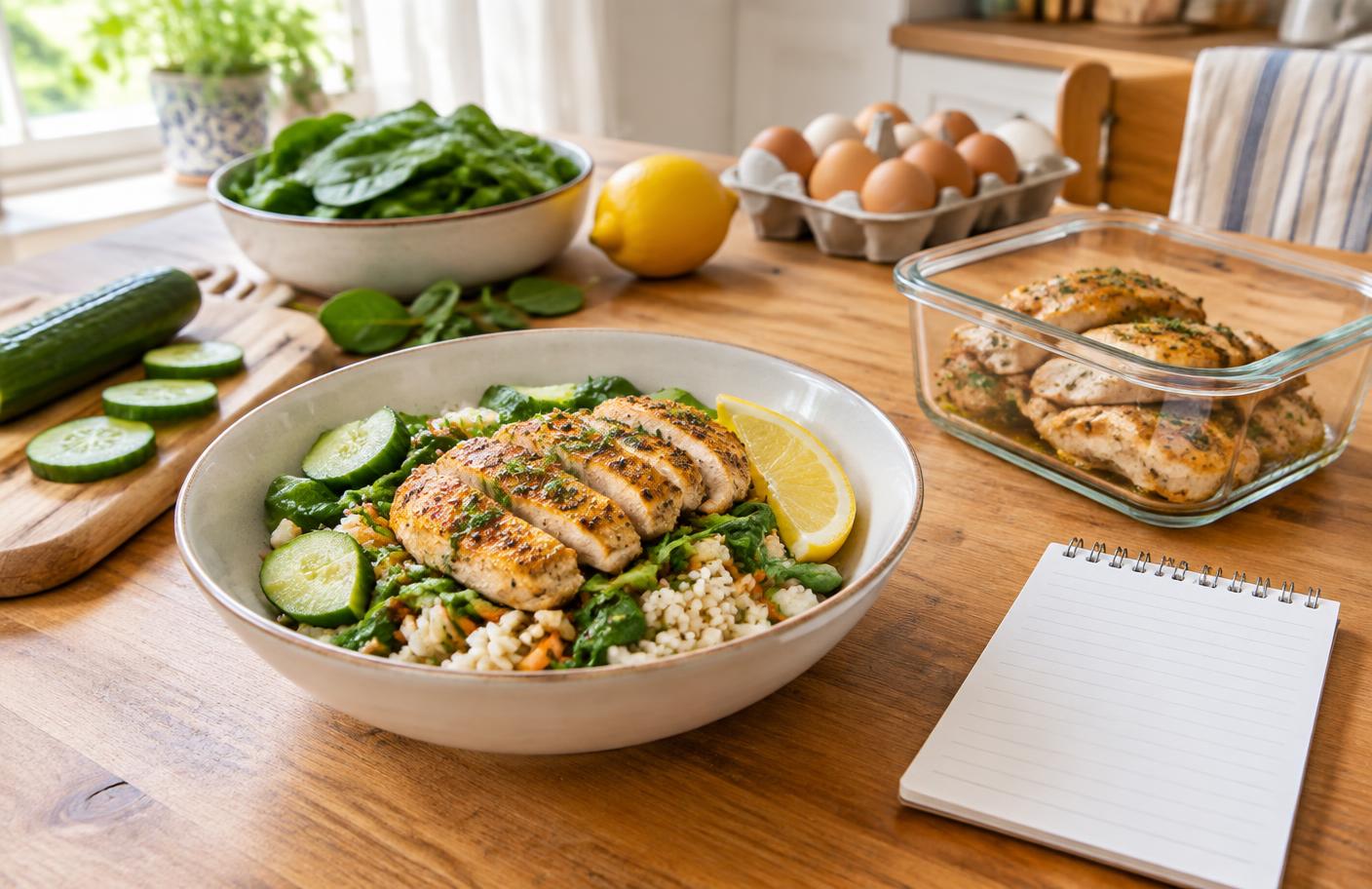
Buying for one is its own puzzle: a recipe serves four, a packet serves six, and Wednesday’s lettuce is already wilting. The answer is not seven separate dinners. Buy a few ingredients that can play more than one role, cook small batches, and leave space for a night out.
Quick answer: Plan three cooked dinners, two deliberate leftover meals, one pantry meal and one flexible night. Make breakfast and lunch repeatable, but not identical every day. The shopping list below is for one adult; adjust it for appetite and dietary needs.
How to meal plan for one person without wasting food
- Check what you already own. Check the fridge, freezer and cupboard before shopping; write down anything that needs using first.
- Choose two overlapping proteins and two versatile vegetables. This example uses chicken, eggs, spinach and carrots. Swap the chicken for tofu if preferred, adjusting cooking instructions.
- Make only two portions when useful. Eat one now and refrigerate or freeze the other promptly, rather than making six portions you will resent.
- Keep one open night. Move a meal to the freezer if plans change.
The USDA MyPlate Kitchen has more meal ideas when you want to vary the pattern.
A flexible seven-day meal plan for one
Use the first half of the week for fresh ingredients and frozen portions later. This is an example, not a prescribed diet.
- Monday: Breakfast: yogurt, oats and berries. Lunch: egg and spinach toast. Dinner: lemon chicken rice bowl (make two portions).
- Tuesday: Breakfast: overnight oats. Lunch: leftover chicken rice bowl. Dinner: chickpea, spinach and tomato skillet (make two portions).
- Wednesday: Breakfast: eggs on toast. Lunch: leftover chickpea skillet with rice. Dinner: vegetable omelette with carrots on the side.
- Thursday: Breakfast: yogurt and berries. Lunch: spinach and egg on toast. Dinner: a freshly cooked rice-and-egg bowl with any remaining vegetables.
- Friday: Breakfast: overnight oats. Lunch: egg and carrot wrap. Dinner: a pantry rice bowl with any remaining vegetables.
- Saturday: Breakfast: yogurt, oats and fruit. Lunch: leftovers that were frozen promptly, thawed safely. Dinner: flexible night — eat out, repeat a favorite or use the freezer.
- Sunday: Breakfast: eggs on toast. Lunch: egg wrap with lemon yogurt. Dinner: use-up vegetable and egg fried rice; make next week’s list from what remains.
Practical swap: If you would rather not repeat a meal within three days, freeze the extra portion as soon as it cools and use a pantry dinner instead. See the leftovers guide for details.
Two complete recipes that share ingredients
These yield two portions each; the serving control on each card scales measurable quantities. Check chicken with a food thermometer rather than relying on color.
The recipe
Lemon chicken and vegetable rice bowls
Ingredients
- 300 gboneless chicken breast (about 2 small pieces)10.5 oz at original yield
- 100 gdry rice3.5 oz at original yield
- 1 carrot, diced
- 0.5 cucumber, sliced
- 50 gbaby spinach1.8 oz at original yield
- 1 tbspolive oil
- 0.5 tspdried oregano
- 0.5 lemon, juiced
- To tastesalt and pepper
Method
- 1Cook the rice according to the package directions. Wash the vegetables and prepare two shallow serving bowls or storage containers.
- 2Heat the oil in a frying pan over medium heat. Season the chicken with oregano, salt and pepper; cook, turning occasionally, until the thickest part reaches 74°C (165°F) on a food thermometer. Allow 15–20 minutes depending on thickness; do not rely on the clock alone.
- 3Rest the chicken for a few minutes, then slice. Divide rice, carrot, cucumber and spinach between two bowls; add the chicken and squeeze lemon over each.
Use the rest of the spinach while it is fresh. If a different can size leaves extra chickpeas, keep them covered in the fridge and use them promptly.
The recipe
Chickpea, spinach and tomato skillet
Ingredients
- 1 canchickpeas (about 400 g / 14 oz can), drained and rinsed
- 1 canchopped tomatoes (about 400 g / 14 oz can)
- 0.5 onion, diced
- 1 garlic clove, minced
- 75 gbaby spinach2.6 oz at original yield
- 1 tspolive oil
- 0.5 tsppaprika
- To tastesalt and pepper
Method
- 1Warm the oil in a skillet over medium heat. Cook the diced onion for 4–5 minutes until softened, then add garlic and paprika for 30 seconds.
- 2Add the drained chickpeas and tomatoes. Simmer for about 10 minutes, stirring occasionally, until thickened.
- 3Stir in the spinach until wilted. Season to taste. Serve one portion with cooked rice or on toast; store the second portion separately.
One-person shopping list
Check your cupboard first. Quantities account for both recipes plus the other simple meals above; package sizes vary, so choose the closest available size and freeze what you cannot use in time.
- Fresh: 2 small chicken breasts, about 300 g (10.5 oz) total; 1 lemon; 1 cucumber; 2 carrots; 1 onion; 1 bell pepper; 1 small bag baby spinach, about 150 g (5 oz); 1 garlic bulb; 1 piece of fruit or a small bag of frozen berries.
- Fridge: 10 eggs; plain yogurt, about 500 g (18 oz).
- Cupboard: 1 can chickpeas, about 400 g (14 oz); 1 can chopped tomatoes, about 400 g (14 oz); dry rice, about 500 g (18 oz); rolled oats, about 250 g (9 oz); 1 small loaf bread or a pack of wraps. You may have bread left for the freezer.
- Already have or buy small amounts: olive oil, paprika, salt, pepper and dried oregano.
Use the printable grocery list to tick off what you have. If a package is larger than you need, freeze portions of bread and raw chicken separately before their use-by date.
Food safety when cooking for one
Refrigerate perishable leftovers within 2 hours in shallow containers. Keep the fridge at 4°C (40°F) or below, and use cooked leftovers within 3–4 days or freeze promptly. Cook poultry to 74°C (165°F). When reheating leftovers, heat them to 74°C (165°F). These are FoodSafety.gov recommendations; see its storage chart for item-specific times.
For more ways to use overlapping ingredients, see the pantry staples checklist or use the portion scaler on your own recipes.